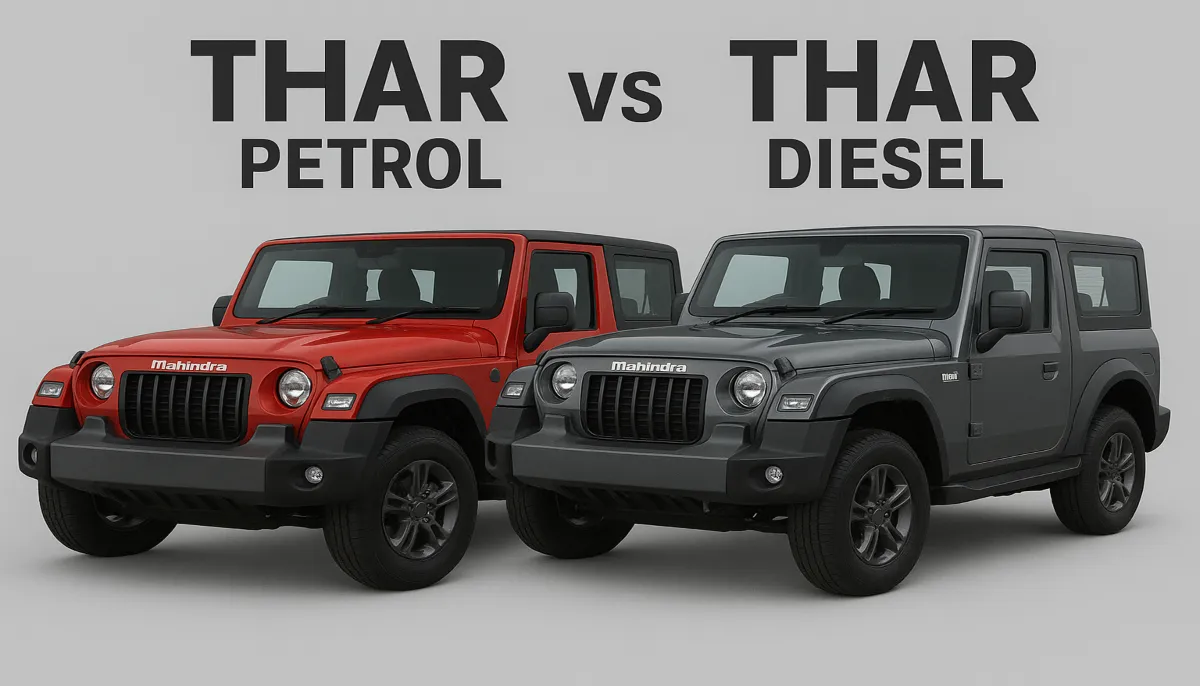
Thar Petrol vs Diesel: 7 Critical Power, Mileage and Maintenance Differences
If you’re thinking about buying a Mahindra Thar one of the biggest decisions. You’ll face is choosing between the petrol and diesel engines. Both have their strengths but they’re quite different in real world performance, fuel economy and what you’ll spend on upkeep.
I’ve spent considerable time researching owner experiences, dealer feedback and hands on testing to put together this detailed comparison. Whether you drive mainly on highways, navigate city traffic or take your Thar off road. This guide will help you understand exactly what you’re getting with each engine option.
Understanding the Thar Engine Options
The current Mahindra Thar lineup offers two main engine choices. A turbocharged petrol engine and a turbocharged diesel engine. Both are modern, reliable powerplants designed specifically for the Thar’s rugged character and diverse driving conditions.
The petrol engine is designed for drivers who value responsiveness and simpler maintenance. The diesel option appeals to those who prioritize fuel economy and long distance capability. Neither is objectively better it really depends on your driving patterns, budget and personal preferences.
Thar Petrol vs Diesel Mileage: Real World Fuel Economy
One of the most important factors when choosing between Thar petrol and diesel is fuel efficiency. This directly impacts your monthly expenses and overall cost of ownership.
Thar Petrol vs Diesel Power Delivery: Horsepower and Torque
Understanding the power characteristics of each engine helps determine which feels better for your driving style.
Thar Petrol vs Diesel Service Cost: Maintenance Expenses
Long term ownership costs extend beyond fuel prices. Service and maintenance costs significantly impact your total investment.
Thar Petrol vs Diesel Reliability: Long Term Performance
Reliability is crucial when choosing your Thar engine option. Both engines have proven themselves dependable but they exhibit different reliability characteristics.
Thar Petrol vs Diesel Running Cost Analysis
Let’s break down the real monthly and annual costs you’ll face with each engine option.
| Cost Factor | Thar Petrol | Thar Diesel |
|---|---|---|
| Monthly Fuel (1,500 km) | ₹4,500–5,500 | ₹3,500–4,200 |
| Annual Servicing Cost | ₹6,000–8,000 | ₹8,000–10,500 |
| Tire & Brake Wear | Moderate | Moderate |
| Oil Change (6 month) | ₹800–1,200 | ₹1,000–1,500 |
| Total Annual Running (10,000 km) | ₹66,000–75,000 | ₹54,000–64,000 |
Note: Costs vary based on fuel prices, service center location, driving habits and current market rates.
The data shows that Thar diesel has a clear advantage in total running costs. Especially if you drive more than 15,000 kilometers monthly. The fuel savings compound significantly over a year.
However, petrol’s lower maintenance costs partially offset this advantage. The gap widens in diesel’s favor once your annual mileage exceeds 20,000 kilometers.
Thar Petrol vs Diesel Performance in Different Scenarios
Thar Petrol Problems vs Thar Diesel Problems
Understanding common issues helps you make an informed decision.
Thar Petrol vs Diesel Resale Value
When you eventually sell or trade your Thar engine choice affects resale value.
Diesel Thars typically command a 5-10% price premium in the used market due to superior fuel economy and durability perception. Buyers seeking long term ownership often prefer diesel despite the higher upfront cost.
Petrol Thars have good resale value but typically fetch slightly less. However, they attract buyers prioritizing lower initial purchase price and simpler maintenance so finding buyers isn’t difficult.
The resale value gap widens if your Thar has very high mileage. A diesel Thar with 150,000 kilometers holds value better than a petrol equivalent.
Is Thar Petrol Good for Daily Use?
Yes, the Thar petrol is excellent for daily use. Particularly if you drive fewer than 15,000 kilometers monthly in urban environments. The responsive character makes city driving enjoyable and maintenance is straightforward.
The petrol Thar is ideal if you value simplicity. Don’t want to worry about fuel quality and appreciate immediate throttle response. Many city based Thar owners choose petrol specifically for these reasons and report complete satisfaction.
The only consideration is accepting slightly higher fuel costs. If monthly fuel expenses are manageable within your budget, petrol is a great choice for daily driving.
Is Thar Diesel Good for Long Drives?
Absolutely The Thar diesel excels at long distance highway driving. The fuel efficiency means you can cover 500+ kilometers on a single tank, dramatically reducing fuel stops during road trips.
The diesel engine’s steady economical character makes long drives less fatiguing on your fuel budget. If you frequently take your Thar on highway adventures or have a long daily commute, diesel is the logical choice.
The diesel Thar’s durability also appeals to those planning to keep their vehicle for many years while racking up significant mileage.

Best Thar Engine Option: Making Your Choice
Choosing between Thar petrol and diesel ultimately depends on your specific circumstances.
Thar Petrol vs Diesel Buyer Guide: Final Recommendations
For the average buyer the decision comes down to driving patterns and budget.
If your primary use is weekend adventures and occasional city driving petrol works beautifully. The lower purchase price, straightforward ownership and engaging driving character make it compelling.
If your lifestyle involves regular long distance travel, high annual mileage or you’re planning a five year plus ownership journey, diesel becomes increasingly attractive. The fuel savings and durability justify the higher upfront cost.
Consider your fuel budget carefully. Even a modest fuel cost difference multiplies dramatically over thousands of kilometers. A diesel Thar saves approximately ₹800-1,200 monthly compared to petrol for average driving, translating to ₹10,000-15,000 annually.
Thar Petrol vs Diesel Maintenance Tips for Longevity
Regardless of your engine choice, proper maintenance is crucial.
Mahindra Thar Petrol vs Diesel 2026: What’s New
Recent updates to the Thar lineup have brought improved efficiency to both engine options. Newer petrol versions feature advanced fuel injection technology improving mileage by approximately 1-2 km/l compared to earlier variants.
Diesel engines now come with improved DPF systems requiring less frequent cleaning. Both engines have refined noise and vibration characteristics making them quieter and more refined than previous generations.
The latest Thar petrol and diesel models also feature better insulation and damping creating a more pleasant cabin experience during highway drives.
Personal Opinion and Final Thoughts
After analyzing real owner experiences, maintenance records and performance data. I believe both engines are excellent choices. They’re just excellent for different reasons.
The Thar petrol is the answer for drivers who want simplicity, lower initial cost and engaging daily driving. It’s perfect for enthusiasts who enjoy the mechanical connection to their vehicle and don’t mind visiting fuel stations more frequently.
The Thar diesel is the answer for pragmatic drivers focused on total cost of ownership, frequent highway travel and long term ownership plans. The financial benefits accumulate substantially over years of ownership.
Personally, if I drove the Thar primarily on highways and planned to keep it for five years diesel would be my choice. The cumulative fuel savings alone would justify the premium, plus I’d enjoy better resale value.
However, if I lived in a city and drove casually without extreme mileage requirements. I’d choose petrol for its simplicity and lower maintenance complexity.
The Thar is an exceptional vehicle platform and either engine choice ensures you’ll get a capable, reliable companion for years to come. Make your decision based on honest assessment of your driving patterns, budget constraints and long term ownership plans you can’t go wrong either way.